

When a commercial lender is ready to close, one old filing can still stop the deal. Commercial title issues can surface in commercial real estate after a title search during due diligence. This may happen after appraisals, underwriting, and financing terms are largely arranged. Deposits, rate locks, and tenant plans can then come under pressure.
You can’t solve a title defect by sending another bank statement. For commercial property, a real estate attorney can help evaluate ownership authority, access, and recorded rights. A careful review should cover public records, surveys, and land-use restrictions.
The fastest closings begin title work early, then give every exception a clear owner and deadline.
This post may contain affiliate links. If you make a purchase through these links, I may earn a small commission at no extra cost to you.
Key Takeaways
- Order and review the title commitment early so liens, unreleased mortgages, unpaid taxes, and chain-of-title problems have time to be resolved.
- Use an ALTA/NSPS survey to compare recorded rights with physical conditions, including boundaries, easements, encroachments, access, and parcel contiguity.
- Review entity authority, zoning, parking, access, and development restrictions separately because title insurance does not automatically cure operational or land-use problems.
- Assign each title issue a document, decision-maker, and deadline, while keeping operating capital separate from the real estate purchase funds.
Commercial title issues that can halt a closing
A title commitment identifies the conditions a title company needs before insuring a transaction. It can reveal title defects or recorded encumbrances affecting a commercial real estate loan or commercial property marketability. Some items are routine exceptions, while others require lender review because the collateral may not be marketable or fully accessible.
| Title issue | Why it delays the loan | Common cure |
|---|---|---|
| Unreleased mortgage | A prior lender still appears to have a claim | Obtain and record a satisfaction or release |
| Mechanic liens | The conventional term is “mechanics’ liens,” and a contractor may have rights against the property | Pay, release, bond off, or resolve the lien |
| Unpaid taxes | Delinquent property taxes or assessments can become liens | Pay the balance, confirm proration, or obtain a tax-status update |
| Easement or encroachment | Buildable area, access, or parking may be restricted | Review the survey and negotiate coverage or a cure |
| Chain-of-title break | The seller may lack documented authority to convey | Produce deeds, entity records, probate documents, or corrective instruments |
| Access or zoning concern | The property may not support the intended use | Confirm legal access and municipal compliance |
Many of these issues aren’t fatal, but legal disputes may require negotiated or formal resolution beyond routine paperwork. A lender and title insurer need enough evidence to price, exclude, or insure the risk before documents can be signed.
Read the title commitment before the lender does
Order a title search as soon as the purchase agreement gives you a due diligence window. Review every requirement and exception with your real estate attorney, title officer, surveyor, and lender.
Liens and stale releases need immediate attention
A paid-off loan can remain a problem if its mortgage or deed of trust never received a recorded release. The seller may say the debt disappeared years ago, yet county records still show the lien. The title company will usually require a recorded satisfaction before it insures clear title.
Mechanic’s liens require the same urgency. A contractor, subcontractor, or supplier may claim unpaid work on a recent renovation, roof replacement, or tenant buildout. Payment, a signed release, or a state-approved bond process may cure the issue. Still, state lien rules vary, and disputes can take weeks or months.
Entity authority can break the chain of title
Commercial property ownership rarely follows a simple homeowner-to-homeowner path, so the file must establish legal ownership and authority to convey.
A complex corporate structure may involve a multi-tiered LLC, trust, estate, partnership, merged corporation, or foreign entity registered to do business in the state. Missing deeds, name discrepancies, mergers, probate events, or corrective instruments can interrupt that chain.
The title company may request operating agreements, certificates of good standing, merger papers, member resolutions, trustee authority, probate orders, or letters testamentary. A misspelled entity name in an earlier deed can also require a corrective affidavit or deed.

Use an ALTA survey to test the real property
A title search explains recorded rights. An ALTA/NSPS Land Title Survey tests whether the physical site matches those rights. As part of due diligence, it checks conditions recorded documents may not show. That difference matters when the property includes multiple parcels, shared drives, utility corridors, parking fields, or older improvements.
Match the survey to the legal description
An ALTA survey tests property boundaries and can reveal a fence, building, parking area, or other improvement crossing a line. It may also identify utility easements across future expansion space or a missing route to a public road. Finding these conditions early can prevent boundary disputes from delaying the lender’s review or closing. The survey also helps confirm whether separate parcels are contiguous when the lender expects one integrated collateral package.
Review ALTA survey fundamentals before treating an old site plan as enough. The surveyor needs the current title commitment, including its exceptions, to compare the survey and site plan, resolve survey issues, and reconcile the property’s legal description.
Check zoning, access, and development limits separately
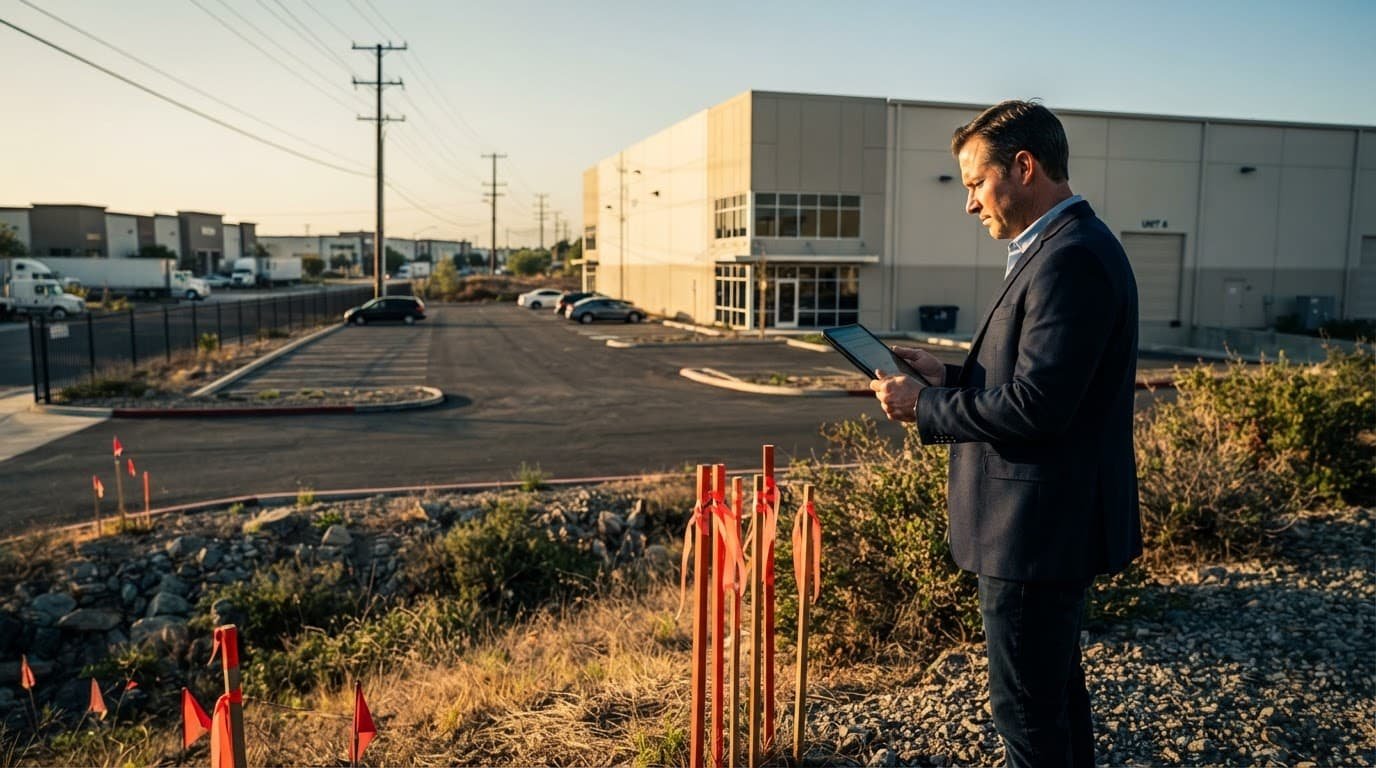
Zoning issues require separate review because title insurance doesn’t automatically confirm that a property’s current use meets zoning rules. A warehouse may lack required parking. A medical office may operate as a legal nonconforming use. A retail center may depend on a shared access easement that limits signage or delivery traffic.
Local boundary requirements can also exceed national baseline standards, as guidance on survey requirements under local law explains. Ask for zoning classification, setbacks, parking counts, flood information, environmental restrictions, and applicable Table A survey items when they affect the business plan.
Clear title defects in the right order
A disciplined cure plan keeps the closing process moving and prevents small tasks from becoming a closing-week scramble. Assign dates, documents, and decision-makers as soon as the commitment arrives.
Follow four practical steps
- Reconcile the purchase agreement’s legal description with the title commitment and survey before the lender’s final underwriting review.
- Request payoff letters, lien releases, entity documents, and probate records immediately, since third parties often control the timeline.
- Ask the title company whether recorded boundary disputes require a cure, an agreement, or an endorsement.
- Send the lender written updates when a material issue affects the collateral, closing date, closing timeline, or source of funds.
A stale release may clear within days. A mechanic’s lien dispute, boundary agreement, or estate correction can extend much longer. Meanwhile, review the property’s commercial real estate debt yield because a prolonged closing can affect income, expenses, debt yield, and loan sizing.
Understand what title insurance does and does not cover
A lender’s title insurance policy protects the lender’s lien. An owner’s policy protects the buyer’s equity against covered past defects, subject to exclusions and exceptions. Survey review often supports endorsements for access, contiguity, or certain encroachment risks.
Title insurance may protect against a hidden historic defect, but it does not make an unusable access route, parking shortage, or zoning violation disappear.
The commercial title and survey handbook explains why insurers rely on ALTA surveys when deciding which exceptions to remove and which endorsements to issue.
Protect operating cash while title work continues
A delayed closing shouldn’t force a healthy company to miss payroll, skip inventory, or postpone a project milestone. Keep operating financing separate from the real estate purchase, and disclose any new debt or obligation to the commercial lender.
Use short-term capital for the business, not the down payment
Short-term business funding can bridge a contractor’s payroll gap while a lien release is recorded. Advertising claims such as 24-hour business loans, same day business funding, instant business capital, and emergency business funding require careful review. Check the fees, maturity date, collateral requirements, and repayment frequency before accepting terms.
Working capital for SMBs should protect operating liquidity, not create a hidden source-of-funds concern at closing. Many owners prefer no upfront fee business loans and clear repayment terms. A working capital solution can cover a temporary receivables gap, while unsecured business lines of credit provide a reusable standby option through a line of credit.
Match the funding tool to the operating need
Construction business bridge loans can cover labor and materials between project milestones. Inventory financing for e-commerce can help sellers replenish proven products, while retail seasonal inventory funding can support an upcoming holiday rush.
Healthcare practice working capital may cover payroll during insurance reimbursement delays. Restaurant equipment financing can replace a failed oven or refrigeration unit, and funding for service-based businesses can smooth uneven invoice cycles.
Small business cash flow management also means trimming recurring expenses. Dual pricing payment processing for SMBs can reduce card-fee pressure during a delayed closing. Alternative funding for small businesses and U.S. small business funding should match reliable operating revenue. This includes funding for businesses with $10k monthly revenue and small business capital for established companies.
Business owners researching how to build business credit fast should focus on clean records, on-time payments, and a documented plan. Business credit building programs can support that work. Using OPM to scale a business only works when the capital has a defined purpose and repayment follows dependable cash flow.
Frequently Asked Questions
What commercial title issues most often delay loan closings?
Unreleased mortgages, mechanics’ liens, unpaid taxes, chain-of-title breaks, easement problems, and access or zoning concerns commonly delay closings. The lender and title insurer need enough evidence to cure, exclude, or insure each material risk.
When should a buyer order a commercial title search?
Order the title search as soon as the purchase agreement provides a due diligence window. Early review gives the buyer, attorney, surveyor, lender, and title company time to resolve recorded issues before final underwriting.
Does title insurance cover zoning, parking, or access problems?
Title insurance generally does not confirm that the property’s current use complies with zoning or that the site has adequate parking or usable access. These issues require separate review of municipal requirements, surveys, easements, and the property’s intended use.
What should a buyer do when a title defect is discovered?
Identify the required cure, responsible party, supporting documents, and deadline immediately. Keep the lender informed about any issue that could affect the collateral, closing date, closing timeline, or source of funds.
Keep the closing moving
These issues reward early action, not last-minute optimism. Clear liens, verify authority, reconcile the survey, and separate operating capital from purchase funds before the lender reaches final approval.
A clean title package gives the lender confidence in the property and gives you room to focus on the business behind it. Get a free financial consultation to see your options before a delay puts pressure on daily operations.